




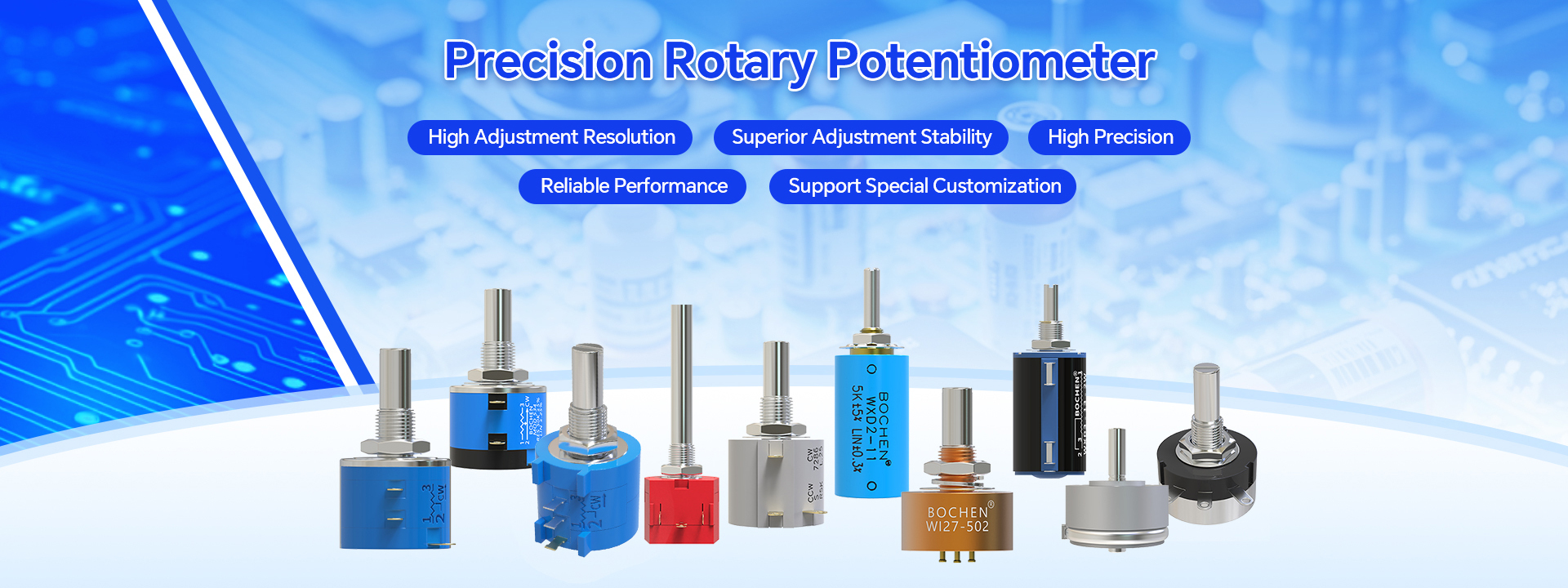




The Role of Multi-Turn Trimmer Potentiometers in Instrument Calibration
2025-10-28
Parameter Adjustment Requirements in Electronic Instruments
In electronic measurement instruments, industrial testing equipment, and laboratory electronics, circuit parameters often need to be adjusted during production, calibration, or maintenance stages. Small adjustments to resistance values can influence voltage levels, signal gain, or reference parameters in analog circuits.
For this reason, adjustable components such as multi-turn trimmer potentiometers are commonly used in calibration circuits. These components allow engineers and technicians to fine-tune electrical parameters directly on printed circuit boards.
The 3296W Cermet Trimmer Potentiometer is one of the commonly used adjustable components in such applications due to its compact structure and adjustable resistance mechanism.
Multi-Turn Adjustment Structure
Multi-turn trimmer potentiometers use an internal screw-driven adjustment mechanism. By rotating the adjustment screw multiple turns, the resistance value can be changed gradually rather than abruptly.
This adjustment structure provides several practical characteristics in circuit calibration:
gradual resistance change for fine adjustment
controlled parameter tuning during circuit setup
suitability for precision calibration circuits
Because adjustment occurs over multiple rotations, engineers can tune circuit parameters with higher control compared with single-turn potentiometers.
Typical Calibration Applications
In instrumentation circuits, trimmer potentiometers are frequently used to calibrate analog signal paths or reference voltages. Typical calibration tasks include:
signal amplification adjustment
sensor signal offset calibration
reference voltage trimming
gain control in analog processing circuits
These calibration steps are common in many electronic instruments used for industrial measurement and laboratory testing.
Applications in Industrial Electronics
Within industrial electronic systems, trimmer potentiometers are typically used during equipment commissioning and periodic maintenance. Engineers may adjust resistance values to match the actual operating conditions of the system.
Typical equipment where trimmer potentiometers are used includes:
industrial automation controllers
electronic testing instruments
programmable power supplies
sensor interface modules
In these systems, adjustable potentiometers support precise parameter configuration during device setup.
View More
How to Choose the Right Microstrip Resistor to Improve Device Performance?
2025-09-30
How to Choose the Right Microstrip Resistor to Improve Equipment Performance
In modern electronic devices, choosing the right microstrip resistor is extremely important. It not only affects the performance of the circuit but also determines the overall stability and reliability of the equipment. In this article, we will discuss how to select the right microstrip resistor to help improve your device performance.
What Is a Microstrip Resistor?
A microstrip resistor is a resistor specially designed for radio frequency (RF), microwave, and high-speed signal transmission applications. Its structure minimizes signal loss, making it ideal for high-frequency environments.
Think of your electronic device as a high-performance race car, and the microstrip resistor as the racing track it runs on. Choosing the right resistor allows your device to operate smoothly and efficiently.
Key Factors When Selecting a Microstrip Resistor
When selecting a microstrip resistor, several important factors should be considered.
1. Resistance Value
Resistance value is the most fundamental parameter of a microstrip resistor. Different circuits require different resistance values. Selecting the wrong value is like putting the wrong fuel in a racing car—it will directly affect the performance of your device.
Therefore, the resistance value must match the specific requirements of the circuit design.
2. Power Rating
The power rating determines the maximum power the resistor can safely handle. Excessive power may cause overheating or even damage the resistor.
Just like a small vehicle cannot pull a heavy truck, the power rating must be selected according to the actual load requirements of the circuit.
3. Temperature Coefficient
The temperature coefficient indicates how the resistor behaves under different temperatures. Resistors with poor temperature stability may affect the normal operation of the circuit in high-temperature environments.
Selecting a microstrip resistor with a good temperature coefficient helps ensure stable performance under varying operating conditions.
4. Size and Package
In many high-density circuit designs, space is limited. Microstrip resistors come in different package types and sizes. Choosing the correct package according to the PCB layout is very important.
Just like arranging furniture in a crowded room, proper space planning ensures that everything fits perfectly.
Applications of Microstrip Resistors
Microstrip resistors are widely used in several high-frequency applications, including:
Wireless communication systems
Radar systems
High-frequency testing equipment
RF and microwave circuits
In these applications, the performance of the resistor directly affects signal clarity and stability. Similar to how high-quality speakers improve sound quality, selecting the right microstrip resistor can significantly enhance overall system performance.
How to Test the Performance of Microstrip Resistors
After selecting a suitable microstrip resistor, testing its performance is equally important. Here are several common testing methods.
1. DC Resistance Test
Use a multimeter to measure the DC resistance and confirm that it meets the specified value. This step is similar to performing a basic inspection before driving a car on the road.
2. High-Frequency Performance Test
For high-frequency applications, a network analyzer can be used to measure the S-parameters of the microstrip resistor. This ensures that the resistor performs well under high-frequency conditions.
This process is similar to testing a race car on a track to ensure it can achieve the expected speed and performance.
3. Temperature Rise Test
Operate the resistor under actual working conditions and observe the temperature rise. This test ensures that the resistor will not overheat during long-term operation.
It is similar to testing the durability of a race car to ensure it can perform reliably over time.
Conclusion
Choosing the right microstrip resistor is essential for improving the performance of electronic equipment. From resistance value and power rating to temperature coefficient and package size, every detail should be carefully considered.
In addition, proper testing should not be overlooked. Only through thorough testing can you ensure that the equipment maintains excellent performance under various operating conditions.
When selecting a microstrip resistor next time, take the time to carefully evaluate all factors. After all, the resistor serves as a fundamental component of your system—only with a solid foundation can you build a high-performance electronic device.
View More
Analysis of the advantages of microstrip resistors and which industries they are suitable for.
2025-09-19
Advantages of Microstrip Resistors and Their Applications in Various Industries
In modern electronic devices, microstrip resistors have gradually become an indispensable component. Have you ever wondered why microstrip resistors are so popular? What are their advantages? Today, we'll delve into the advantages of microstrip resistors and see which industries they are suitable for.
What is a Microstrip Resistor?
Before discussing the advantages of microstrip resistors, let's briefly understand what they are. As the name suggests, a microstrip resistor is a resistor manufactured using a microstrip line structure. These resistors typically have a small size and perform better at high frequencies. They are commonly used in radio frequency (RF) and microwave applications because they excel in such environments.
Advantages of Microstrip Resistors
So, what are the main advantages of microstrip resistors? We can look at them from the following aspects:
1. Superior High-Frequency Performance
First, microstrip resistors perform exceptionally well in high-frequency applications. Traditional resistors may experience signal attenuation and distortion at high frequencies, while microstrip resistors effectively reduce these problems. This is crucial for wireless communication, radar, and other high-frequency applications. Imagine how bad it would be if your signal were interfered with during transmission? Microstrip resistors were developed precisely to solve this problem.
2. Compact Size, Space Saving
Secondly, microstrip resistors are relatively small, saving a significant amount of space. This is especially important for slim and lightweight electronic devices such as mobile phones and tablets. Imagine if your device had too much space occupied by a single resistor; it could affect the overall design and portability.
3. Strong Thermal Stability
Microstrip resistors also exhibit excellent thermal stability. This means they maintain stable performance even under high temperatures or rapid temperature changes. For industrial applications, such as automation equipment or automotive electronics, stability is crucial. Imagine the consequences if a car's electronic equipment malfunctioned due to temperature fluctuations.
4. High Production Efficiency
Furthermore, the manufacturing process for microstrip resistors is relatively simple, allowing for mass production. This undoubtedly reduces costs and increases efficiency for companies engaged in large-scale production. In a highly competitive market, who wouldn't want to produce high-quality products at a lower cost? 5. High Adaptability
Furthermore, microstrip resistors exhibit excellent adaptability in various working environments. They maintain stable performance regardless of whether the environment is high humidity, high temperature, or low temperature. This is especially important for equipment operating in extreme environments.
Applications of Microstrip Resistors
So, which industries are suitable for microstrip resistors? Actually, the application range of microstrip resistors is very wide. Let's look at a few major industries:
1. Telecommunications Industry
In the telecommunications industry, microstrip resistors are almost indispensable. Whether it's base stations, routers, or wireless devices, they all require the support of microstrip resistors to ensure stable signal transmission. It can be said that the application of microstrip resistors directly affects the quality of communication.
2. Medical Industry
Medical equipment has extremely high precision requirements, and the high stability and high-frequency performance of microstrip resistors make them an ideal choice for medical equipment. For example, ultrasound equipment and electrocardiogram monitors all rely on the support of microstrip resistors.
3. Automotive Industry
Modern cars are becoming increasingly intelligent, and the number of electronic devices is constantly increasing. The application of microstrip resistors in automotive electronics can ensure the stable operation of various systems and ensure driving safety.
4. Aerospace
In the aerospace field, the superior performance of microstrip resistors makes them a critical component. Spacecraft and satellites need to operate in extreme environments, and the high stability and adaptability of microstrip resistors make them an ideal choice.
5. Industrial Automation
With the rapid development of industrial automation, the application of microstrip resistors in automated equipment is becoming increasingly widespread. They ensure that equipment maintains good performance under harsh conditions such as high temperature and high humidity.
Summary
Through the above analysis, we can see the many advantages of microstrip resistors and their wide range of applicable industries. Whether in the communications, medical, automotive, or aerospace fields, microstrip resistors play an important role. With the continuous advancement of technology, microstrip resistors will demonstrate their unique charm in even more fields.
View More
Microstrip resistors: a core component in the manufacture of electronic components
2025-09-10
In today's rapidly developing technological era, the performance and stability of electronic devices have become a focus for every manufacturer. Among numerous electronic components, microstrip resistors, as a core component, are quietly playing a crucial role. You might ask, what exactly is a microstrip resistor? What role does it play in electronic component manufacturing? Let's explore this further.
What is a Microstrip Resistor?
A microstrip resistor is essentially a resistor used in a microstrip line structure. Simply put, it acts like an "obstacle" in a circuit, controlling the flow of current. Imagine placing a small stone in a wide river; the water flow is affected by the stone, slowing its speed. This "small stone" is the role of the microstrip resistor in the circuit.
How a Microstrip Resistor Works
The working principle of a microstrip resistor is actually quite simple. It utilizes the properties of the resistive material to dissipate electrical energy and convert it into heat energy. As a result, when current passes through the microstrip resistor, a voltage drop occurs due to the resistance. This is like a relay race where runners need to overcome an obstacle while passing the baton; only by overcoming this obstacle can they continue forward.
Common materials used in manufacturing microstrip resistors include metal oxides, carbon films, and metal films. Each of these materials has its unique cost-effectiveness and performance, allowing manufacturers to choose the appropriate material based on their specific needs. Choosing the right microstrip resistor material is like choosing a pair of running shoes—the one that suits you best is the best.
Applications of Microstrip Resistors
So, what are the applications of microstrip resistors? They are almost ubiquitous. Whether in smartphones, computers, or various household appliances, microstrip resistors can be found everywhere. Especially in the field of communications, their role is undeniable. They help ensure stable signal transmission, reduce interference, and improve communication quality.
Furthermore, microstrip resistors are playing an increasingly important role in automotive electronics, medical equipment, and industrial control. For example, in medical monitoring equipment, microstrip resistors ensure accurate data transmission, helping doctors monitor patients' conditions in real time. In industrial control, microstrip resistors ensure the normal operation of equipment and guarantee production stability.
Advantages of Microstrip Resistors
The first advantage of microstrip resistors is their small size and light weight. This makes them highly promising for modern electronic devices, especially portable ones. Who doesn't love a compact and lightweight product? In the pursuit of luxurious and slim designs, microstrip resistors are undoubtedly the ideal choice for manufacturers.
Furthermore, the accuracy and stability of microstrip resistors make them shine in various complex circuits. Imagine a high-precision measuring instrument; without the help of a microstrip resistor, the results might be inaccurate, affecting the measurement's precision. The microstrip resistor acts like a meticulous referee, maintaining fairness and impartiality in the competition.
The Future of Microstrip Resistors
With continuous technological advancements, the development prospects of microstrip resistors are becoming increasingly broad. The ongoing research and development of new materials and improvements in manufacturing processes have made it possible to enhance the performance of microstrip resistors. In the future, we can expect more efficient and stable microstrip resistor products to help various electronic devices reach new heights.
In short, as an indispensable part of electronic components, microstrip resistors are not just simple components, but also the foundation of modern technological development. Whether in everyday smart devices or complex systems in industrial applications, microstrip resistors play an indispensable role. Their existence makes our electronic world more efficient and stable.
View More
Exploring the application areas of microstrip resistors and how they improve circuit stability
2025-08-29
In modern electronic devices, circuit stability is paramount. Microstrip resistors, as a crucial component for improving circuit performance, have increasingly attracted the attention of engineers. Have you ever wondered how microstrip resistors play a role in so many applications? Today, we'll delve into the applications of microstrip resistors and see how they contribute to circuit stability.
Basic Concepts of Microstrip Resistors
First, a microstrip resistor is a specially designed resistor, typically existing in thin or thick film form. Their relatively simple structure allows them to perform exceptionally well in high-frequency signal transmission. Their unique geometry gives microstrip resistors superior performance in achieving high precision and low noise.
Imagine how inconvenient it would be to use your mobile phone if the signal was unstable! The advent of microstrip resistors is precisely to ensure stable signal transmission. When processing high-frequency signals, they effectively reduce reflection and attenuation, thereby improving the reliability of the entire circuit.
Application Areas of Microstrip Resistors
1. Communication Field
Microstrip resistors are particularly widely used in wireless communication devices. They can be used not only in RF amplifiers but also embedded in antenna designs. 1. Microstrip Resistors: Engineers can improve signal quality, reduce interference, and ensure smooth communication.
Imagine without microstrip resistors, the stability of mobile phone signals would be greatly affected, potentially leading to call interruptions or data transmission failures. In this case, microstrip resistors act like "guardians" in the circuit, ensuring accurate information transmission.
2. Medical Equipment
The role of microstrip resistors is equally important in medical equipment. Modern medical equipment requires high-precision signal processing to ensure accurate diagnosis. Microstrip resistors help these devices stabilize signals, reduce noise, and thus improve data reliability.
Imagine how a doctor can assess a patient's heart health if the signal from an electrocardiogram (ECG) device is unstable. Microstrip resistors act like "invisible assistants," silently safeguarding life.
3. Automotive Electronics
With the continuous development of automotive electronics, microstrip resistors are playing an increasingly important role in automotive electronic systems. Whether it's ABS systems, autonomous driving, or entertainment systems, microstrip resistors improve signal integrity and stability, enabling the smooth operation of various vehicle functions.
Imagine if a car's sensor signals were unstable; the autonomous driving system might malfunction, affecting driving safety. The addition of microstrip resistors is precisely to prevent this.
4. Industrial Control
In the field of industrial control, microstrip resistors also play a crucial role. Due to the complex and variable industrial environment, signal stability is paramount. Microstrip resistors maintain good performance under extreme conditions such as high temperature and high humidity, providing reliable assurance for industrial automation.
Imagine if the sensor signals on a production line are unstable; this could lead to reduced production efficiency or even safety hazards. Microstrip resistors act like a "safety valve" to ensure smooth production, guaranteeing the normal operation of the system.
How to Improve Circuit Stability
So, how can we improve circuit stability using microstrip resistors? Here are some practical methods and techniques:
1. Choosing the Right Material
The choice of material for microstrip resistors is crucial. Using high-quality thin-film or thick-film materials can significantly improve the stability and durability of the resistor.
2. Optimizing Layout
A reasonable layout design can effectively reduce signal interference in the circuit. When designing microstrip resistors, carefully controlling the length and direction of the wiring can reduce signal reflection and improve stability.
3. Temperature Control
Temperature changes affect resistor performance; therefore, the impact of ambient temperature on microstrip resistors must be considered when designing circuits. Taking appropriate heat dissipation measures can effectively extend the lifespan of the resistors.
4. Regular MaintenanceEven high-quality microstrip resistors may experience performance degradation over time. Therefore, regular inspection and maintenance are crucial to ensuring circuit stability.
Conclusion
In summary, microstrip resistors have demonstrated excellent performance and stability in various applications. Through proper design and maintenance, we can significantly improve circuit stability and ensure the smooth operation of various electronic devices.
So, next time you use a mobile phone, medical device, or car, consider the contribution of microstrip resistors. They are like the "unsung heroes" of circuits, silently ensuring our daily lives.
View More